
The Untapped Resource Sitting in Retired IT Equipment
Thursday, September 17, 2026
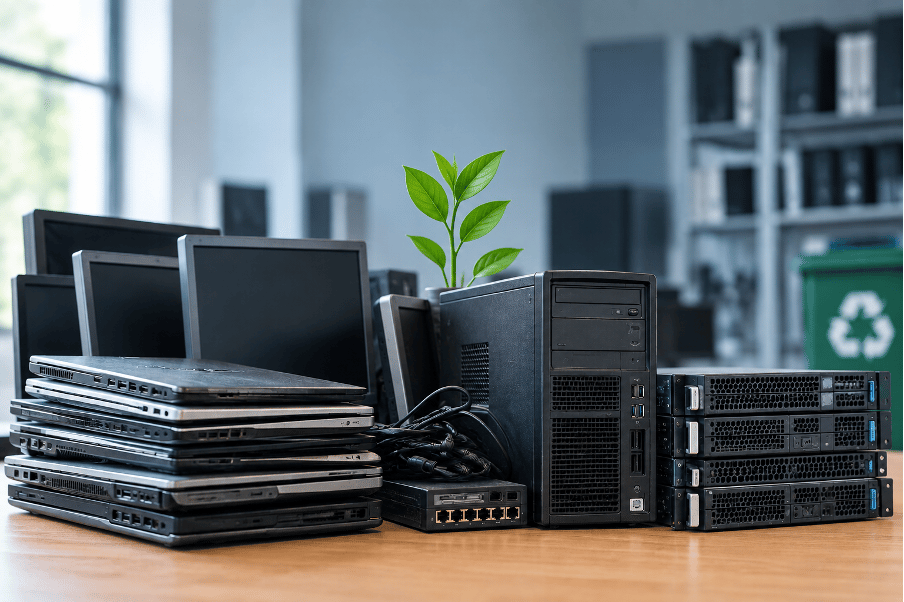
When people think about the resources needed to support the digital economy, they often focus on data, connectivity and energy. Discussions around artificial intelligence and data centres typically centre on processing power and electricity demand. However, beneath every server, laptop, storage device and network switch lie another resource challenge that receives far less attention, which is that modern technology depends on a vast range of critical minerals.
Copper enables power distribution and connectivity; lithium and cobalt support battery systems and rare earth elements are used in components ranging from hard drives to cooling systems. Aluminium remains essential for infrastructure and equipment manufacturing. Without these materials, the digital services businesses rely upon every day simply would not exist. As the UK's digital infrastructure expands, demand for these resources is expected to grow significantly, placing increasing pressure on already complex global supply chains. While much of the conversation focuses on securing future supplies, there is another opportunity sitting much closer to home: the technology that organisations have already purchased, deployed and eventually retired.
The Hidden Foundation of Digital Growth
Data centres have become one of the fastest-growing infrastructure sectors in the UK. Government-backed research recently highlighted that more than 90 new data centre facilities are planned by 2030, with continued investment being driven by artificial intelligence, cloud computing and digital transformation initiatives. These developments are expected to increase demand for critical minerals including copper, aluminium, lithium, cobalt and rare earth elements used throughout digital infrastructure and backup power systems. The challenge is that many of these materials are sourced through global supply chains that are vulnerable to geopolitical uncertainty, market volatility and concentrated production in a relatively small number of countries. In many cases, supply is influenced not by geological scarcity but by the complexity of extraction, processing and international trade.
As demand for digital technologies accelerates, competition for these resources is increasing across multiple sectors. The same minerals required for data centres and AI infrastructure are also needed for electric vehicles, renewable energy systems, advanced manufacturing, defence technologies and healthcare applications. This creates an important question. If the resources required for future technologies are becoming more valuable and more difficult to secure, are organisations doing enough to recover value from the technologies they already possess?
Technology Does Not Lose Its Value When It Leaves Service
Across offices, storage facilities and IT departments throughout the UK, countless devices sit unused after being replaced by newer equipment. Laptops are upgraded. Servers are decommissioned. Storage devices are retired. Network infrastructure is modernised. In many cases, these assets are viewed solely as equipment that has reached the end of its useful life.
However, the materials contained within these devices do not lose their value simply because the equipment is no longer operational. Every retired laptop contains a combination of metals, plastics, electronic components and raw materials that required significant energy and resources to extract, process and manufacture. When multiplied across thousands of devices, the resource value contained within retired technology becomes substantial.
This is one reason why the concept of a circular economy is becoming increasingly important. Rather than viewing technology as a linear process of purchase, use and disposal, organisations are being encouraged to think about how assets can be reused, refurbished, recovered and responsibly recycled. Doing so not only reduces waste but also helps support longer-term resource resilience.
Why Recovery Matters More Than Ever
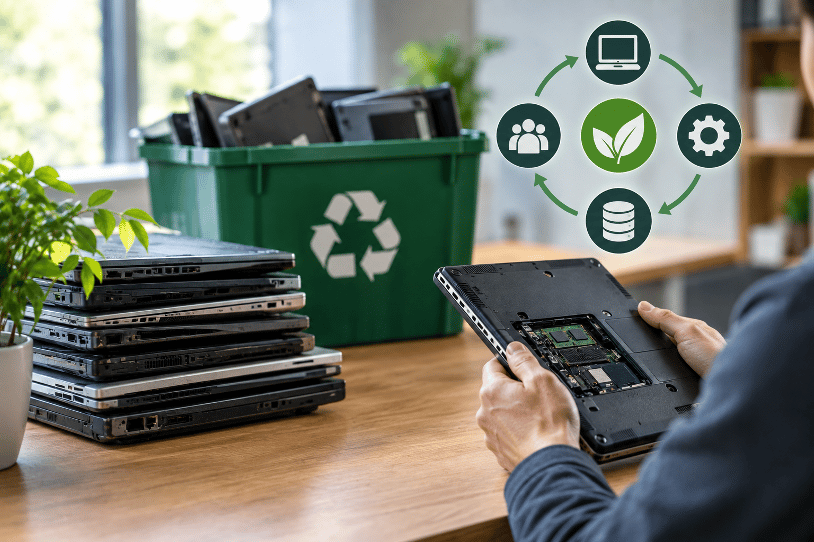
Research from the UK Critical Minerals Intelligence Centre suggests that secondary supply chains and recycling will play a growing role in supporting future mineral demand.
In fact, recent analysis found that by 2050, recovered materials could provide more than 60% of cumulative demand for battery metals and more than 85% of demand for certain rare earth elements used in magnets. The report highlights recycling and material recovery as an increasingly important part of future supply security. While these projections relate to broader technology sectors, the underlying principle is equally relevant for information technology.
Every device recovered, reused or responsibly recycled contributes to a wider effort to maximise the value of existing resources. This does not eliminate the need for newly extracted materials. Demand for technology is growing too quickly for recycling alone to meet future requirements. However, creating stronger secondary supply chains can help reduce pressure on primary resources while improving resilience against future supply disruptions.
The Business Case for Better Asset Management
For organisations, the benefits of responsible technology lifecycle management extend beyond sustainability. Retired IT assets often contain sensitive business information, customer records, financial data and intellectual property. This means that end-of-life asset management must balance both resource recovery and information security.
Devices left in storage can create uncertainty around asset ownership, data exposure and compliance responsibilities. Over time, organisations may lose visibility of what equipment they have, where it is located and whether it still contains recoverable information. A structured approach to end-of-life asset management helps address these challenges while ensuring equipment is managed responsibly.
At NLTS, we support organisations through secure IT collections, certified data destruction, detailed asset reporting and responsible recycling services. Our role is to help businesses maintain visibility and control over retired technology assets while ensuring sensitive information is securely managed throughout the disposal process.
By treating end-of-life technology as an asset management exercise rather than simply a disposal task, organisations can make more informed decisions about how equipment is handled once it leaves active service.
Security and Sustainability Go Hand in Hand
One of the misconceptions surrounding IT asset disposal is that organisations must choose between security and sustainability. The two objectives are closely connected. Before any equipment can be reused, refurbished or recycled, organisations need confidence that data has been securely removed and that processes are properly documented. This is why governance, traceability and process control are so important.
At NLTS, our operations are supported by ISO 27001 Information Security Management and ISO 9001 Quality Management certifications. These internationally recognised standards help ensure that information security and quality remain central to the way technology assets are handled, tracked and processed throughout their lifecycle. For businesses managing increasingly complex technology estates, documented processes provide confidence that retired equipment is being handled both securely and responsibly.
Looking Beyond the Device
The UK's digital future will require continued investment in infrastructure, innovation and technology. However, it will also require a greater understanding of the resources that make that growth possible.
The discussion around critical minerals is often framed as a challenge for governments, mining companies and manufacturers. Yet organisations themselves have an important role to play. Every retired laptop, server, storage device and network component represent more than redundant equipment. It represents materials, resources and value that have already entered the economy.
As pressure on global supply chains increases and demand for digital infrastructure continues to grow, businesses may begin to view end-of-life technology differently, not simply as waste to be removed, but as part of a wider resource ecosystem. The most valuable resources are not always the ones we need to find. Sometimes, they are the ones we have already been using all along.
Call 0203 380 7075
Email: info@nlts.co.uk
Site: www.nlts.co.uk
North London Telecoms Systems
WEEE Registration Number and carrier licence:
CBDL156450
footer 2CBDU485395footer 2
We are looking to purchase Cisco, Avaya, Nortel, Mitel, Ericsson, siemens, shoretel, Alcatel, Snom.