
The Rising Heat Impact of AI-Powered Data Centres
Thursday, June 25, 2026

Artificial intelligence is transforming the way organisations operate. From advanced analytics and automation to generative AI tools that support everything from customer service to software development, businesses are increasingly relying on AI-powered technologies to improve efficiency and drive innovation. However, while much of the conversation focuses on the opportunities AI creates, less attention is given to the infrastructure required to support it.
Behind every AI query, model training session and automated process sits a vast network of data centres operating around the clock. These facilities have become the foundation of the AI economy, housing thousands of servers and specialised processors that perform enormous volumes of calculations every second. As demand for AI continues to accelerate, so too does the need for more data centre capacity.
The challenge is that AI infrastructure comes with significant environmental considerations. Alongside growing electricity and water consumption, researchers are now examining another consequence of rapid expansion: heat. Recent studies suggest that large AI data centres may be contributing to measurable temperature increases in surrounding areas, raising new questions about sustainability, infrastructure planning and the long-term environmental impact of AI growth.
Why AI Requires So Much Computing Power
Traditional data centres have supported digital services for decades, but AI workloads are fundamentally different. Training and operating large language models require powerful graphics processing units (GPUs) and specialised AI hardware capable of performing thousands of calculations simultaneously. Unlike many traditional business applications, AI systems often run continuously, processing vast quantities of data and serving millions of user requests.
As AI adoption increases, organisations are generating more demand for computational power than ever before. According to the International Energy Agency (IEA), data centres consumed approximately 415 terawatt-hours (TWh) of electricity in 2024, representing around 1.5% of global electricity demand. That figure is projected to increase significantly as AI adoption expands, with estimates suggesting global data centre electricity consumption could approach 945 TWh by 2030. This rapid growth is driving an unprecedented wave of data centre construction across the world.
The Global Expansion of AI Data Centres
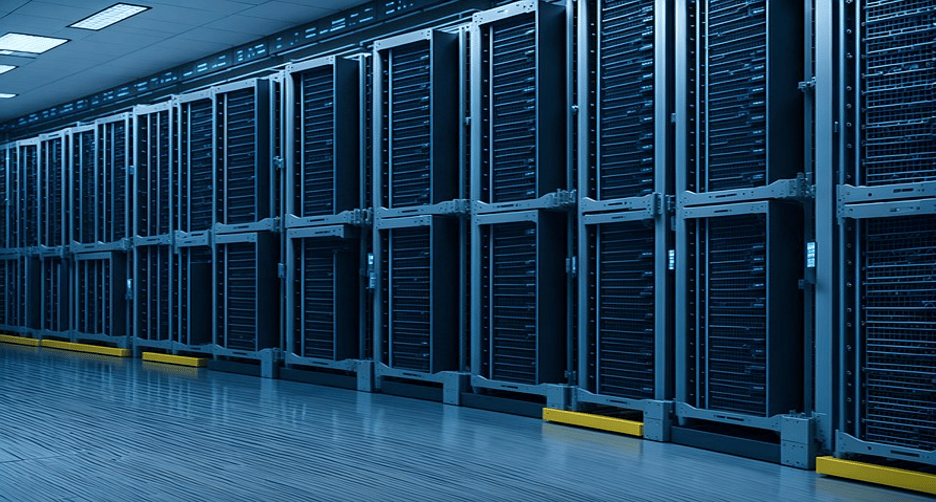
The scale of current data centre development is unlike anything seen before. As of June 2026, there were more than 11,600 active data centres worldwide, with the United States accounting for over 4,300 facilities. Europe remains a major hub, with the United Kingdom hosting more than 540 data centres, alongside significant concentrations in Germany and France. Meanwhile, Asia continues to experience rapid growth, particularly in China, India and Southeast Asia.
The largest facilities, known as hyperscale data centres, are being developed by major technology companies including Microsoft, Amazon, Google and Meta. According to Synergy Research Group, the number of hyperscale facilities worldwide has nearly doubled since 2021, increasing from around 700 to almost 1,300 sites. These facilities are essential for supporting AI services, cloud computing and digital transformation initiatives. However, their increasing size and density are also creating new environmental pressures.
Why Heat Matters
At first glance, a few degrees of temperature increase may not seem significant. However, when applied across large geographical areas, even relatively small increases can influence local energy demand, cooling requirements and overall environmental conditions. The same study estimated that more than 340 million people worldwide live within the potential impact zones of existing AI data centres. Researchers suggested that these temperature increases could influence community wellbeing, local infrastructure and regional environmental conditions over time.
As governments and businesses work towards sustainability goals, understanding these indirect impacts is becoming increasingly important. The discussion around AI infrastructure is evolving from simply asking how much electricity data centres consume to considering their broader influence on surrounding communities and ecosystems.
Managing Heat Requires Significant Resources
Heat generation is not simply an environmental challenge; it is also an operational one. Servers, GPUs and networking equipment generate enormous amounts of heat during operation. If temperatures are not carefully controlled, performance can suffer, and equipment lifespans may be reduced.
To prevent this, hyperscale facilities rely on sophisticated cooling technologies. Some use advanced liquid cooling systems, while others employ large-scale air management and heat exchange systems. These cooling processes themselves require substantial resources. Reports suggest that a single 100-megawatt hyperscale data centre may consume approximately 2.5 billion litres of water annually, equivalent to the yearly needs of around 80,000 people. As AI workloads continue to increase, finding more efficient ways to manage heat will become a critical challenge for both operators and policymakers.
Sustainability Must Consider the Full Infrastructure Lifecycle
While much of the current discussion focuses on energy consumption and cooling requirements, sustainable AI infrastructure involves more than operational efficiency alone. Every data centre contains significant quantities of technology assets, including servers, storage systems, networking equipment and specialised AI hardware. As facilities expand and technology evolves, large volumes of equipment are regularly upgraded, replaced and decommissioned. This creates an additional sustainability challenge.
Organisations must not only consider how infrastructure is powered and cooled but also how technology assets are managed throughout their lifecycle. Extending asset lifespans where appropriate, recovering value from retired equipment and ensuring responsible end-of-life processing all contribute to reducing the overall environmental impact of digital infrastructure. As AI drives more rapid hardware refresh cycles, responsible asset management is becoming an increasingly important part of sustainable data centre operations.
The Role of NLTS in Supporting Sustainable Infrastructure
As organisations invest in new infrastructure to support AI and growing digital demands, managing retired technology responsibly becomes increasingly important. NLTS helps organisations maintain visibility and control over end-of-life IT assets through secure and compliant IT asset disposition (ITAD) services.
Through secure collections, certified data destruction, comprehensive asset reporting, WEEE-compliant recycling and asset recovery services, NLTS supports organisations looking to balance technology growth with responsible lifecycle management.
For data centre operators, cloud providers and enterprises managing large technology estates, effective asset disposition can help reduce waste, support sustainability objectives and ensure infrastructure upgrades are carried out securely and compliantly. As conversations around AI sustainability continue to evolve, technology lifecycle management will remain an important part of the wider environmental picture.
Looking Ahead
Artificial intelligence is set to become one of the defining technologies of the coming decade, and the infrastructure supporting it will continue to expand rapidly. However, the conversation around AI can no longer focus solely on innovation and performance. The growing body of research surrounding energy consumption, water usage and heat generation highlights the importance of considering the broader environmental consequences of digital growth.
The emergence of the data heat island effect demonstrates that AI infrastructure has impacts that extend beyond the walls of the facilities themselves. As more hyperscale sites are built around the world, organisations, policymakers and infrastructure providers will need to balance technological progress with responsible environmental stewardship. The future of AI will depend not only on how much computing power we can build, but also on how sustainably we manage the infrastructure that makes it possible.
Call 0203 380 7075
Email: info@nlts.co.uk
Site: www.nlts.co.uk
North London Telecoms Systems
WEEE Registration Number and carrier licence:
CBDL156450
footer 2CBDU485395footer 2
We are looking to purchase Cisco, Avaya, Nortel, Mitel, Ericsson, siemens, shoretel, Alcatel, Snom.