
The Next Digital Revolution Might Be About Efficiency
Thursday, September 24, 2026

For much of the modern digital era, technological progress has been measured by speed and scale. Each generation of hardware has delivered more processing power than the one before it. Storage capacities have increased dramatically. Networks have become faster. Software has become more capable. Businesses have benefited from technologies that can process larger volumes of information in shorter periods of time.
This approach has helped shape the digital world we know today. Cloud computing has transformed how organisations access technology. Artificial intelligence is changing how businesses analyse information and make decisions. Data centres have become the backbone of everything from online banking and healthcare systems to streaming platforms and e-commerce.
Recent developments in artificial intelligence have accelerated this conversation. The computing requirements associated with training and operating advanced AI models are higher than those associated with many traditional workloads. As organisations invest more heavily in AI-driven tools and services, demand for processing capacity continues to rise. The International Energy Agency has highlighted that global electricity demand from data centres is expected to increase considerably over the coming years as AI adoption expands. This places growing pressure on infrastructure providers, technology companies and energy networks alike.
Why Computing Efficiency Matters More Than Ever
Digital services have become embedded in almost every aspect of modern life. Every online search, financial transaction, video call and AI-generated response relies on a network of infrastructure operating behind the scenes. Millions of servers work continuously to process information, store data and deliver services to users around the world.
As demand grows, so too does the amount of energy required to support these activities. Historically, improvements in hardware performance helped offset rising demand. Processors became faster while also becoming more efficient. Advances in engineering allowed organisations to achieve greater performance without proportional increases in energy consumption. The pace of digital growth is now creating fresh challenges.
Artificial intelligence has become a particularly significant factor. Training large-scale AI models requires vast computational resources. Running these models also consumes substantial amounts of processing power once they are deployed. The scale of this demand has led technology companies and infrastructure providers to search for solutions that can improve efficiency without limiting innovation. This is where emerging technologies such as photonic computing are beginning to attract attention.
The Potential of Light-Based Technologies
Traditional computing systems rely on electrical signals moving through processors and electronic circuits. This approach has delivered extraordinary advances over many decades. However, moving electrical signals generates heat and requires energy. As performance requirements increase, managing heat and power consumption becomes increasingly important. Researchers are now exploring ways to use light rather than electricity for certain computing and networking functions.
The concept may sound futuristic, yet light already plays an important role in digital infrastructure through fibre optic communications. Information can travel through optical fibres at extremely high speeds while experiencing very low levels of signal loss. Photonic computing seeks to apply similar principles within computing environments.
By using light to transfer and process information, researchers believe it may be possible to improve performance while reducing energy consumption in some applications. Although the technology remains under development, the potential benefits have attracted significant interest from organisations seeking ways to support future digital growth more efficiently.
Looking Beyond Energy Consumption
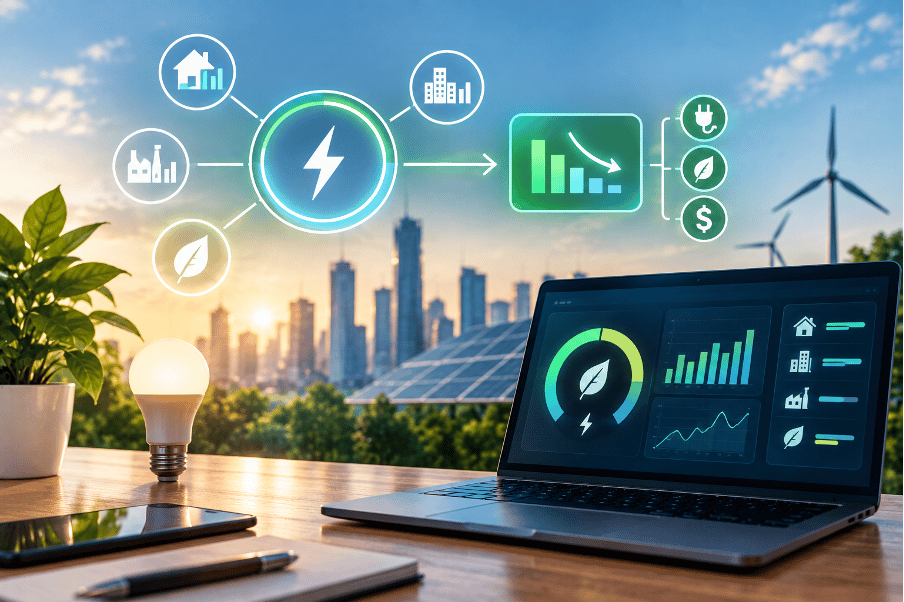
When efficiency is discussed, attention often focuses on electricity usage. Energy consumption is undoubtedly important. However, technology efficiency encompasses a much wider range of considerations. Every device used within an organisation has its own lifecycle. Raw materials must be extracted from the earth. Components are manufactured and assembled. Products are transported across global supply chains before reaching the end user. Equipment is then deployed, maintained and eventually replaced.
Each stage requires resources. As organisations seek to improve sustainability and operational performance, greater attention is being paid to how technology is managed throughout this entire lifecycle. This shift reflects a growing understanding that efficiency is not solely determined by how a device performs during its operational life. The way assets are managed before deployment and after retirement also plays an important role.
The Hidden Challenge of Retired Technology
Many businesses have developed sophisticated strategies for managing active technology assets. Cybersecurity receives significant investment. Infrastructure performance is carefully monitored. Software environments are continually updated and optimised. Retired equipment often receives less attention.
Across organisations of every size, it is common to find laptops, desktops, servers, storage devices and networking equipment that have been removed from service but not yet processed. Some remain in storage rooms for months. Others remain in cupboards or warehouses for years. This can create practical challenges.
Equipment that contains sensitive information may still require secure handling. Asset records may become less accurate over time. Valuable storage space can be occupied unnecessarily. Devices containing recoverable materials may remain unused despite retaining value.
These issues are not always the result of poor management. Technology estates have become increasingly complex. Device refresh programmes, office relocations and organisational changes can all generate large volumes of equipment that require careful handling. As businesses continue to grow their digital capabilities, the importance of managing retired assets effectively is likely to increase.
The Growing Importance of Lifecycle Management
Technology investments are often evaluated according to performance, reliability and cost. Increasingly, organisations are also considering how assets will be managed once they reach the end of their useful life.
This reflects wider changes in business priorities. Information security remains a key concern. Sustainability objectives are becoming more prominent. Governance and accountability continue to receive greater attention from customers, regulators and stakeholders. Effective lifecycle management helps organisations maintain visibility and control throughout the final stages of asset ownership.
At NLTS, we support organisations with secure IT collections, certified data destruction, asset recovery and responsible recycling services. These services help businesses manage retired equipment in a secure and structured manner while maintaining a clear record of how assets have been processed. For many organisations, this level of visibility is becoming increasingly important as technology estates expand, and regulatory expectations continue to evolve.
Efficiency Will Help Shape the Future of Technology
The technology industry is entering a period where efficiency is becoming increasingly valuable. Future innovation will undoubtedly continue to deliver more powerful systems and more advanced capabilities. Artificial intelligence will evolve. Data centres will expand. Digital services will become even more deeply integrated into everyday life.
At the same time, organisations are recognising that long-term success depends upon using resources wisely. Emerging technologies such as photonic computing demonstrate how innovation can help address growing infrastructure demands. Improvements in hardware design, cooling systems and energy management are contributing to the same objective. Better lifecycle management practices also have an important role to play by helping organisations maximise the value of existing assets and maintain greater control over their technology estates.
The next phase of digital progress may therefore be defined by a different set of questions. Rather than focusing exclusively on how much technology can achieve, businesses are increasingly asking how effectively technology can achieve it. In a world where digital demand continues to rise, that distinction may become one of the most important drivers of future innovation.
Call 0203 380 7075
Email: info@nlts.co.uk
Site: www.nlts.co.uk
North London Telecoms Systems
WEEE Registration Number and carrier licence:
CBDL156450
footer 2CBDU485395footer 2
We are looking to purchase Cisco, Avaya, Nortel, Mitel, Ericsson, siemens, shoretel, Alcatel, Snom.