
The Hidden Environmental Cost of Expanding Technology Estates
Thursday, June 18, 2026

Businesses are investing in technology at a pace that would have been difficult to imagine just a decade ago. Whether it's upgrading workplace devices, expanding data storage, strengthening networks or introducing new digital platforms, organisations are constantly adding to their IT infrastructure to support growth and remain competitive in a fast-moving market.
Yet every new device that enters the business has a story that starts long before it is switched on. The extraction of raw materials, the manufacturing process, global transportation and packaging all require significant amounts of energy and natural resources. By the time a laptop arrives on an employee's desk, or a server is installed in a data centre, it has already left an environmental footprint.
For many organisations, sustainability efforts naturally focus on reducing energy use or improving operational efficiency, but there is a much broader picture to consider. The environmental impact of technology doesn't begin when equipment is plugged in, nor does it end when it is replaced. How businesses purchase, maintain, reuse and eventually retire their IT assets has an equally important role to play in creating a more sustainable technology strategy.
Technology Demand Shows No Signs of Slowing Down
The digital economy continues to grow at an extraordinary pace, and with it comes an ever-increasing demand for technology infrastructure. Organisations across every industry are investing in cloud services, AI platforms, automation, cybersecurity, data analytics and digital collaboration tools to improve efficiency and remain competitive. At the same time, hybrid working has increased reliance on laptops, mobile devices and remote connectivity, while advances in artificial intelligence are driving unprecedented demand for high-performance computing and data storage. According to the International Data Corporation (IDC), worldwide spending on digital transformation is expected to exceed $4 trillion by 2027, highlighting the scale of investment businesses are making in technology.
While this investment fuels innovation and economic growth, it also means millions of new devices are being manufactured and deployed every year. Every new server installed in a data centre, every laptop issued to an employee and every networking device added to an organisation's infrastructure requires raw materials, manufacturing, packaging and transportation before it is ever switched on. As technology estates continue to expand, organisations must also consider the environmental consequences of this continuous cycle of procurement and replacement.
The Environmental Impact Begins Long Before Equipment Is Used
Many people associate the environmental impact of technology with electricity consumption, but the reality is that a significant proportion of emissions occur before a device is even powered on.
Manufacturing electronic equipment is an energy-intensive process that relies on the extraction of metals, minerals and rare earth elements from across the world. Mining these materials can have significant environmental consequences, including habitat destruction, water consumption and carbon emissions. The manufacturing process itself also requires substantial amounts of energy, chemicals and water before products are assembled and distributed globally.
The United Nations Environment Programme estimates that resource extraction and processing account for around 50% of global greenhouse gas emissions and more than 90% of biodiversity loss and water stress worldwide. This means that every unnecessary technology replacement creates additional environmental demand long before new equipment reaches an organisation. Extending the lifespan of existing assets, where practical, can therefore have a meaningful impact by reducing the need for additional manufacturing and preserving valuable natural resources.
The Growing Challenge of Electronic Waste
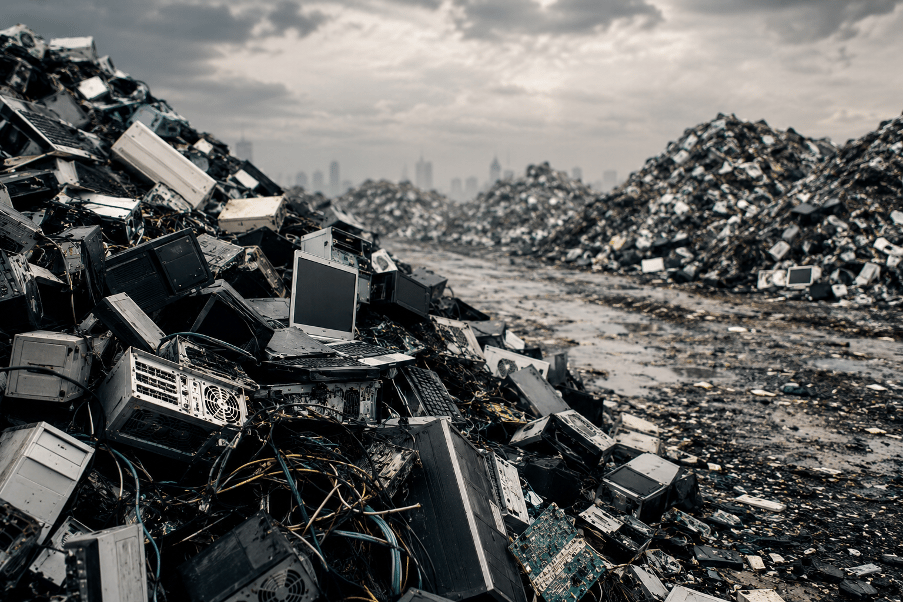
As businesses refresh technology more frequently, electronic waste has become one of the fastest-growing waste streams in the world. Unlike many forms of waste, electronic equipment contains a complex mixture of valuable materials alongside potentially hazardous substances. When devices are not managed responsibly at end-of-life, valuable resources can be lost while unnecessary environmental damage occurs through landfill or informal recycling practices.
According to the Global E-waste Monitor 2024, approximately 62 million tonnes of electronic waste were generated globally in 2022. Despite the value of the materials contained within discarded technology, only 22.3% was formally collected and recycled through documented recycling systems.
The remaining equipment represents a significant loss of recoverable resources, including copper, aluminium, steel and precious metals that could otherwise be reintroduced into manufacturing supply chains. For organisations managing large technology estates, improving end-of-life asset management represents an opportunity to reduce waste, recover value and contribute towards a more circular economy.
Sustainability Is About More Than Energy Consumption
Discussions around sustainable technology often focus heavily on reducing energy usage, improving cooling systems or increasing the efficiency of data centres. While these areas remain extremely important, they represent only one part of a much broader sustainability challenge.
The environmental impact of technology should be considered across its entire lifecycle. From procurement and deployment to maintenance, refurbishment, redeployment and eventual recycling, every stage presents opportunities to reduce waste and make better use of resources.
Businesses that adopt this lifecycle approach often discover that sustainability and operational efficiency go hand in hand. Extending the life of equipment where possible, redeploying underused assets and recovering value from retired technology can reduce procurement costs while simultaneously lowering environmental impact. Rather than viewing retired technology as waste, many organisations are beginning to see it as a resource that still has value when managed correctly.
How NLTS Supports Sustainable Technology Management
As businesses continue expanding their technology estates, the importance of responsible IT asset management continues to grow. NLTS works with organisations to help manage retired technology through secure and compliant IT asset disposition (ITAD) services, supporting businesses throughout the end-of-life process while helping them meet both operational and sustainability objectives.
Secure collections, certified data destruction, detailed asset reporting, WEEE-compliant recycling and asset recovery services all contribute towards greater visibility and accountability over retired equipment.
Where assets are suitable for reuse, extending their lifecycle can reduce unnecessary waste and support circular economy principles. Where equipment has reached the end of its usable life, responsible recycling ensures valuable materials are recovered and processed appropriately. By taking a structured approach to technology lifecycle management, organisations can improve compliance, strengthen information security and make meaningful progress towards their wider sustainability goals.
Looking Ahead
Technology will continue to play a central role in business growth, innovation and digital transformation for many years to come. As organisations invest in new infrastructure, artificial intelligence and increasingly connected workplaces, technology estates are only expected to become larger and more complex. However, expanding technology should not automatically mean expanding environmental impact.
The organisations that will be best positioned for the future are those that look beyond procurement and performance alone, taking responsibility for technology throughout its entire lifecycle. By improving asset visibility, extending equipment lifespans and ensuring responsible end-of-life management, businesses can reduce waste while supporting both sustainability objectives and operational resilience.
The hidden environmental cost of expanding technology estates is becoming harder to ignore. By adopting a more responsible approach to asset management today, organisations can play an important role in building a more sustainable digital future while getting greater value from the technology they already own.
Call 0203 380 7075
Email: info@nlts.co.uk
Site: www.nlts.co.uk
North London Telecoms Systems
WEEE Registration Number and carrier licence:
CBDL156450
footer 2CBDU485395footer 2
We are looking to purchase Cisco, Avaya, Nortel, Mitel, Ericsson, siemens, shoretel, Alcatel, Snom.