
The Environmental Price of Always Having Newer Technology
Thursday, October 15, 2026

Technology moves quickly. Computers become more powerful, software demands increase, and businesses are continually encouraged to upgrade their equipment to keep pace with changing expectations. For organisations managing large IT estates, replacing devices can become a routine part of operations rather than a decision that receives much scrutiny.
New technology can bring genuine benefits. Faster processing, improved security, better energy efficiency and compatibility with modern software can all justify an upgrade. However, there is another side to this cycle that deserves greater attention: the environmental cost of manufacturing new equipment, retiring existing devices and continually consuming the resources needed to support digital progress. As businesses invest in technology to remain competitive, it is worth asking whether replacing equipment is always the best option, or whether more could be gained by making existing assets last longer.
The environmental impact begins before a device is switched on
When considering the environmental impact of IT equipment, attention often falls on the electricity consumed during everyday use. This is an important factor, particularly for businesses operating thousands of computers or energy-intensive infrastructure. However, the environmental footprint of a device begins long before it reaches an office, server room or data centre. Manufacturing electronic equipment requires raw materials, energy, water and complex global supply chains. Metals and minerals must be extracted, processed and incorporated into components before those components are assembled into finished products. The equipment then needs to be packaged and transported to distributors and customers. Each stage has an environmental cost.
A laptop, for example, contains a combination of metals, plastics, glass and electronic components. Producing it requires resources from multiple locations, often involving extensive processing before the finished device is ready for use. Manufacturing replacement equipment repeats much of this process, even when the device being replaced is still functional. This is why the environmental impact of technology cannot be assessed by looking at energy consumption alone. The resources already invested in producing a device also matter.
This raises an important consideration when planning upgrades. If existing equipment continues to meet operational requirements, replacing it simply because a newer model is available may create additional environmental costs without delivering a proportionate benefit.
Are businesses replacing technology before they need to?
Technology upgrades are often driven by practical considerations. Operating systems reach the end of support, software requirements change, security standards evolve, and older devices can become less suitable for demanding workloads. In some cases, replacement is the right decision. However, there is a difference between equipment that genuinely needs replacing and equipment that is simply no longer the newest option.
A computer might still perform well for administrative work even if it is no longer suitable for specialist applications. A laptop that is no longer needed by one department may be perfectly adequate for another. Equipment can also become surplus when employees leave, offices relocate, or businesses change the way their teams work. Without a clear view of existing assets, organisations can end up purchasing new equipment while usable devices remain idle or are retired prematurely.
Research from the European Environment Agency has highlighted the potential to extend the useful lives of electronic products. Its analysis of selected product categories found that actual lifetimes were at least 2.3 years shorter than designed or desired lifetimes. The study covered smartphones, televisions, washing machines and vacuum cleaners, rather than business IT equipment specifically, but it demonstrates how products can leave use before their potential lifespan has been reached.
The equivalent question is whether their IT replacement policies are based on genuine operational needs or simply established habits. Reviewing refresh cycles does not mean keeping outdated equipment indefinitely. It means evaluating the condition, performance, security and suitability of assets before deciding what happens next.
The case for getting more from existing IT
Extending the useful life of technology can reduce the need to manufacture replacement equipment, provided that the environmental benefits are not outweighed by factors such as excessive energy consumption, poor reliability or unsuitable performance. For example, a business may be able to keep a fleet of laptops in service for longer through routine maintenance, battery replacements, memory upgrades or targeted repairs. Another organisation might find that some devices can be reassigned to less demanding roles instead of being replaced across the entire business.
These decisions can also have financial benefits. Delaying unnecessary purchases may reduce capital expenditure, while redeploying existing devices can help organisations get more value from assets, they already own. The key is to consider the role each device needs to perform. A machine used for basic office tasks may not need the same specification as a workstation running specialist engineering software. By matching equipment to actual requirements, businesses can avoid replacing every device according to the same timetable.
There are limits, of course. Older technology may consume more energy, lack important security updates or become increasingly expensive to maintain. Where a new device offers meaningful improvements in security, efficiency or capability, replacement can be justified. The objective should not be to maximise the age of every device. It should be to make informed decisions that balance operational requirements, security, cost and environmental impact.
What happens when equipment is no longer needed?
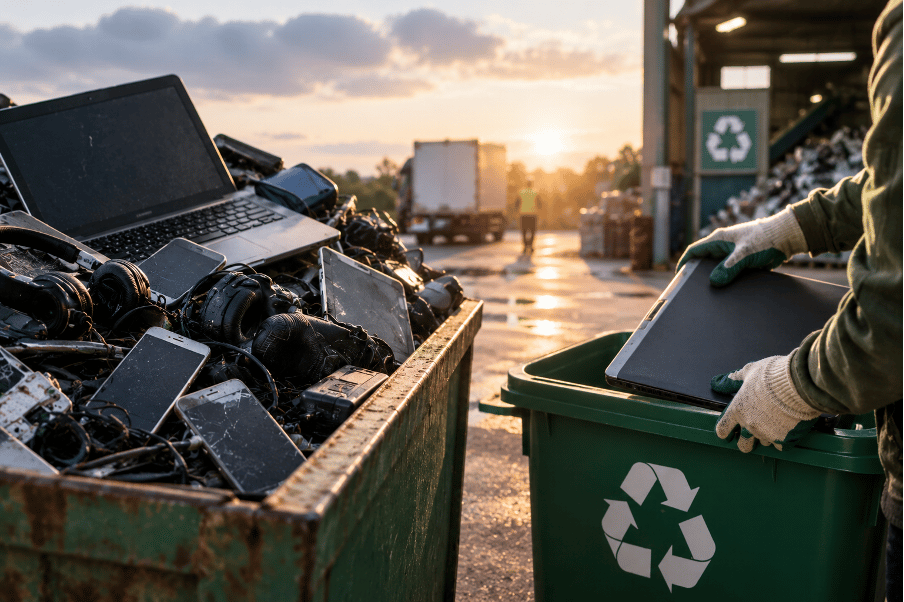
Even with careful purchasing and longer replacement cycles, IT equipment will eventually reach a point where it is no longer suitable for its current role. What happens at that stage is just as important as how long the equipment has been used. A device that is no longer required by its original owner may still have value elsewhere. If it remains functional and meets the requirements of another user, reuse or refurbishment can extend its service life and delay the need to manufacture a replacement.
This is particularly relevant for businesses managing large numbers of laptops, desktops, monitors, servers and networking devices. Equipment is often retired in batches during upgrades, office moves or changes to working practices. Some assets may be suitable for resale or redeployment, while others may be better suited to material recovery.
A structured approach helps organisations distinguish between these outcomes. Asset records can establish what equipment is available, its condition and its specifications. This information makes it easier to identify assets that could be reused, recover value from suitable equipment and ensure that items with no further practical use are directed towards appropriate recycling. The European Environment Agency identifies longer product lifetimes, repair and reuse as important ways to reduce environmental pressures associated with consumption and resource extraction. For businesses, the opportunity is to treat retirement as a decision-making stage rather than an automatic route to disposal.
Data security must remain part of the decision
Keeping equipment in use for longer is only beneficial if it can be managed securely. Computers and storage devices can contain confidential business information, customer records, employee details and commercially sensitive files. When equipment is transferred between departments, sold, donated or removed from a business, those records must be handled appropriately. Simply deleting files or restoring a device to its factory settings may not provide the level of assurance required in every situation. The appropriate method depends on the device, the type of storage involved, the sensitivity of the information and the intended next use.
Businesses should therefore have a clear process for identifying data-bearing equipment and deciding whether secure data erasure or physical destruction is required. Records should also be maintained to demonstrate what has happened to each asset. This becomes particularly important when equipment is being prepared for reuse. Extending a device's life should not come at the expense of information security.
At NLTS, secure collections and certified data destruction form part of our IT asset management services. We help organisations manage equipment as it leaves service, with asset tracking and reporting to provide visibility of the process and its final outcomes.
How NLTS supports more responsible IT asset management
At NLTS, we recognise that managing retired technology involves more than arranging for equipment to be collected. Organisations need to understand where their assets are going, how sensitive information is being handled and whether equipment can be reused or recovered. Our services include secure IT collections, certified data destruction, asset tracking and reporting, responsible recycling and asset recovery. These services help businesses establish a documented route for equipment once it is no longer required.
Where assets retain value, recovery can provide an opportunity to offset some of the costs associated with replacement. Where equipment is no longer suitable for reuse, responsible recycling helps ensure that it is handled through an appropriate route rather than being treated as ordinary waste.
Our approach is supported by ISO 27001 Information Security Management and ISO 9001 Quality Management certifications. These standards support the information security and quality management processes that underpin our work. For organisations reviewing their environmental impact, this kind of process can form part of a wider approach to responsible technology management. It connects practical decisions about equipment with broader aims around resource efficiency, data protection and waste reduction.
A more considered approach to technology
New technology will continue to play an important role in business growth. Better performance, stronger security and improved energy efficiency can all make upgrades worthwhile. The challenge is to ensure that the benefits of new equipment are weighed against the resources required to produce it and the consequences of retiring what came before. The scale of global e-waste shows that current approaches to electronic equipment need to improve. Extending useful lifetimes where practical, reusing suitable devices and recovering materials when equipment can no longer serve a purpose are all ways to make better use of the resources already invested in technology.
This is an opportunity to take a more deliberate approach to IT decisions. Rather than viewing every upgrade as an isolated purchase, organisations can consider the full journey of their equipment, from procurement and daily use through to retirement. The most responsible technology strategy is not necessarily the one that replaces equipment most frequently. It is the one that understands when replacement is genuinely needed, makes the most of existing assets and ensures that every device is managed appropriately when its role comes to an end. That is where thoughtful IT asset management can make a practical difference: helping businesses balance progress with security, value and more responsible use of resources.
Call 0203 380 7075
Email: info@nlts.co.uk
Site: www.nlts.co.uk
North London Telecoms Systems
WEEE Registration Number and carrier licence:
CBDL156450
footer 2CBDU485395footer 2
We are looking to purchase Cisco, Avaya, Nortel, Mitel, Ericsson, siemens, shoretel, Alcatel, Snom.