
Decarbonisation Doesn't End with Energy: The Forgotten Carbon Cost of IT
Thursday, August 20, 2026
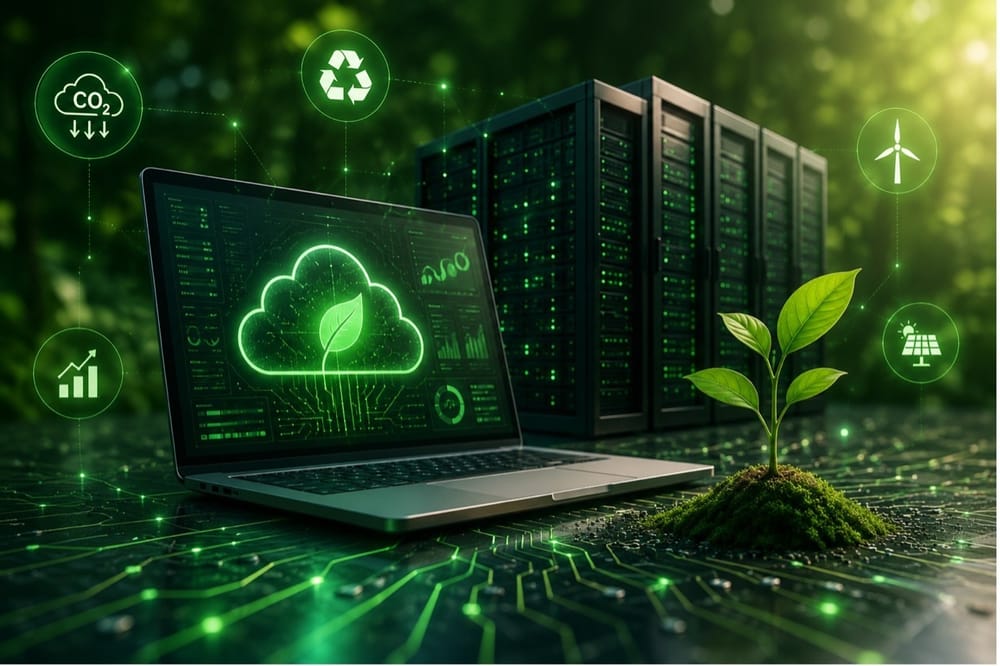
When businesses talk about decarbonisation, the conversation often starts with the biggest and most visible sources of emissions, energy consumption, heating, transport, buildings and manufacturing. Those areas clearly matter. But as organisations become increasingly dependent on technology, it is important to acknowledge that another part of the carbon footprint, IT, deserves much more attention.
Every piece of technology comes with an environmental footprint, from the devices employees use every day to the infrastructure powering your digital services. That impact doesn't begin when a device is switched on, and it doesn't necessarily end when it is switched off. There are emissions associated with extracting the raw materials, manufacturing the equipment, transporting it, powering it throughout its working life and, eventually, dealing with it when it reaches end-of-life.
This makes technology lifecycle management an increasingly important part of the wider sustainability conversation. For businesses working towards net zero, the question shouldn't simply be "How much energy does our technology use?"
It should also be: "What happens to our technology across its entire lifecycle?"
The carbon footprint of IT starts before it reaches your office
One of the easiest mistakes to make when discussing sustainable technology is to focus solely on electricity consumption. A laptop may use relatively little electricity compared with a factory or data centre, but its environmental impact began long before it arrived at an employee's desk.
Manufacturing electronic equipment requires raw materials, energy, water and complex global supply chains. Metals and minerals must be extracted and processed, components manufactured, assembled and transported before a finished device reaches the customer. This means replacing perfectly functional equipment simply because a newer model is available can carry an environmental cost that isn't immediately visible on a company's energy bill.
The scale of the problem becomes even clearer when we look at what happens to technology once it reaches the end of its useful life. According to the UN's Global E-waste Monitor 2024, the world generated a record 62 million tonnes of electronic waste in 2022, an 82% increase since 2010. Only 22.3% of that waste was formally collected and recycled, while global e-waste is expected to reach 82 million tonnes by 2030 if current trends continue.
That highlights an important part of the decarbonisation conversation. The environmental impact of technology doesn't disappear when a device is switched off or replaced. As businesses continue to upgrade their IT and invest in new infrastructure, they also need to consider how retired equipment is reused, recovered or responsibly recycled.
The technology refresh cycle has an environmental cost
Technology is constantly changing and because of this, businesses upgrade laptops to support new software. Servers are replaced as capacity requirements increase, networking equipment reaches the end of its supported life, storage infrastructure is refreshed and data centres upgrade hardware to accommodate increasing workloads.
From an operational perspective, these upgrades make sense. Newer equipment can be faster, more efficient, more secure and better suited to modern workloads.
But every upgrade creates another question: What happens to the equipment being replaced?
If a business purchases 500 new laptops, for example, it hasn't simply acquired 500 new pieces of equipment. It has also created a technology disposal requirement for the 500 devices being removed from service. That equipment may contain valuable materials, potentially reusable components and, critically, data. Simply moving it into a storage room doesn't make the environmental or security responsibility disappear.
E-waste is becoming a much bigger problem
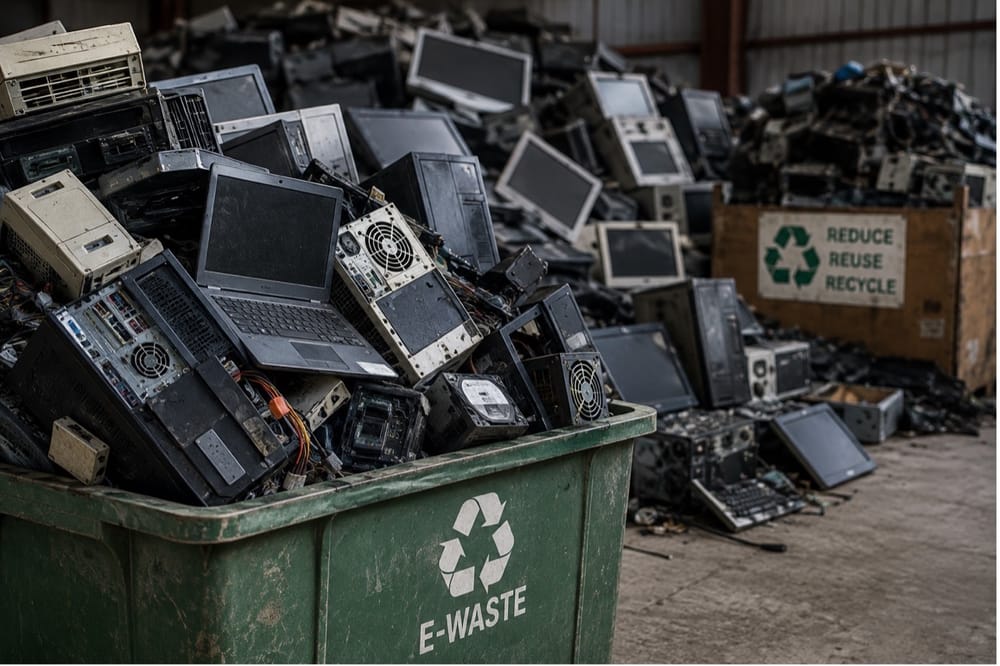
The UK's approach to electrical and electronic waste reflects how significant the issue has become. The Government estimates that 155,000 tonnes of small electrical items are thrown into household bins every year. It has also highlighted the huge volume of unwanted electrical products that remain unused in homes.
Although these figures relate to household electrical waste rather than business IT specifically, they demonstrate the scale of the wider problem. Electronic equipment contains a complex combination of materials, including metals, plastics and components that can potentially be recovered and reused.
The UK's WEEE regulations are designed to encourage the recovery, reuse and recycling of electrical and electronic equipment and reduce the amount being sent to landfill or incineration. For businesses, this means sustainability shouldn't stop at purchasing energy-efficient technology and there is also an opportunity to consider what happens at the other end of the lifecycle.
Reuse should be part of the conversation
One of the most effective ways to reduce the environmental impact of technology is to extend its useful life where it is practical and secure to do so. A device that can be reused is generally more valuable than one that immediately becomes waste.
That doesn't necessarily mean keeping every old laptop or server indefinitely. Technology has a finite useful life, and security, performance, compatibility and reliability all need to be considered.
Instead, businesses should look at their equipment more strategically.
• Could a device be reused internally?
• Could it be refurbished?
• Could it be remarketed?
• Could components be recovered?
• Or has it reached a point where responsible recycling is the most appropriate option?
A well-managed IT asset lifecycle should be able to answer these questions rather than treating every retired device as waste. This is where the concept of the circular economy becomes particularly relevant.
Instead of the traditional linear model of:
Buy → Use → Dispose
businesses can move towards:
Buy → Use → Reuse → Recover → Recycle
That shift can help reduce demand for new raw materials and minimise unnecessary waste.
Sustainability and data security don't have to compete
A properly managed IT asset disposal process can provide a route that considers both environmental responsibility and information security. At NLTS, our approach is centred on managing retired IT equipment securely while supporting responsible recovery and recycling.
We support organisations with the secure management of IT assets when they reach end-of-life, helping to remove the operational burden while maintaining visibility throughout the process. Depending on the condition and requirements of the equipment, this can involve secure collection, certified data wiping or destruction, asset recovery, detailed reporting and responsible recycling.
Security is equally important. NLTS holds ISO 27001 certification for information security management and ISO 9001 certification for quality management, alongside other relevant certifications and accreditations.
A company should be able to demonstrate that a device was collected, that the appropriate data destruction process took place and what happened to the asset following that process. For organisations with sustainability and compliance commitments, having that level of documentation can make IT disposal much easier to incorporate into wider environmental and governance reporting.
Decarbonisation needs a lifecycle mindset
The biggest opportunity isn't necessarily finding one dramatic way to reduce the carbon footprint of IT, it is recognising that hundreds or thousands of small decisions across the technology lifecycle add up.
Digitalisation is not going away. If anything, the growth of AI, cloud computing and connected technology means businesses will become even more dependent on IT infrastructure. That makes responsible technology management increasingly important.
Decarbonisation cannot simply mean using less energy to power our technology. It also means thinking about the resources, manufacturing, lifespan, reuse and end-of-life of the technology itself. For businesses looking to make their sustainability strategies more comprehensive, the IT department may be a good place to look next. Because the carbon cost of technology doesn't end when you unplug it.
Call 0203 380 7075
Email: info@nlts.co.uk
Site: www.nlts.co.uk
North London Telecoms Systems
WEEE Registration Number and carrier licence:
CBDL156450
footer 2CBDU485395footer 2
We are looking to purchase Cisco, Avaya, Nortel, Mitel, Ericsson, siemens, shoretel, Alcatel, Snom.