
Britain's Digital Ambitions Come with an Environmental Price
Thursday, November 19, 2026
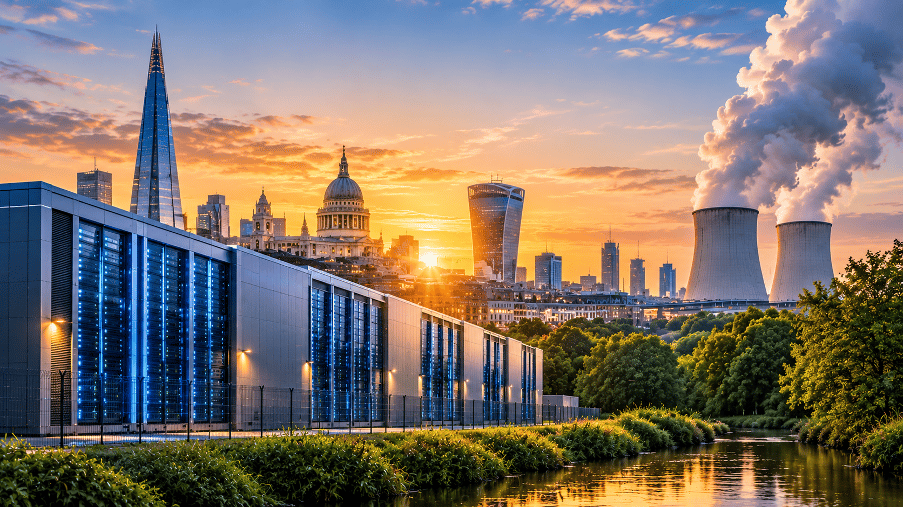
The UK's digital infrastructure is becoming increasingly important to the way businesses operate, public services are delivered, and people communicate. From online banking to artificial intelligence and digital storage, much of modern life depends on facilities capable of processing and storing enormous amounts of information. As demand for these services increases, so does the need for data centres. Investment in new facilities is helping to strengthen the UK's digital capabilities, attract business investment and support technological development. However, this expansion also raises important questions about the environmental resources required to keep everything running.
The environmental impact of data centres is becoming a more prominent part of the conversation. Concerns around electricity consumption, carbon emissions, cooling requirements and the manufacturing of IT equipment are prompting greater scrutiny of how the industry develops.
A recent report by The Guardian, brought further attention to the issue by examining projected carbon emissions associated with planned UK data centre developments and the potential role of gas-powered electricity generation. It highlights an important point: the benefits of digital growth need to be considered alongside its environmental consequences. Building more infrastructure may support the UK's technological ambitions, but the way that infrastructure is powered, maintained and managed will influence its overall environmental footprint. For businesses operating within the sector, sustainability needs to be considered beyond the construction of new facilities. The equipment inside them, how efficiently it is used and what happens when it is eventually replaced are all important parts of the picture.
The growing environmental demands of digital infrastructure
Data centres are often described as the physical foundations of the digital economy. They house the servers, storage systems and networking equipment that allow information to be processed, transferred and accessed around the world. As demand for cloud services, artificial intelligence and online platforms grows, these facilities need to handle increasingly complex workloads. This can mean installing more powerful equipment, expanding existing buildings and developing entirely new sites.
However, running a data centre requires a substantial and continuous supply of electricity. Servers operate around the clock, while cooling systems, power distribution equipment and supporting infrastructure all contribute to overall energy demand.
The scale of this requirement is becoming increasingly significant. According to the International Energy Agency (IEA), data centres consumed approximately 415 terawatt-hours of electricity globally in 2024, representing around 1.5% of worldwide electricity consumption. The IEA's analysis projects that global data centre electricity consumption could more than double to approximately 945TWh by 2030, with artificial intelligence being a major driver of this increase. These figures demonstrate why energy efficiency is becoming such an important consideration for the industry. Even relatively small improvements in the way facilities operate could make a difference when applied across large numbers of servers and supporting systems.
Carbon emissions are only part of the picture
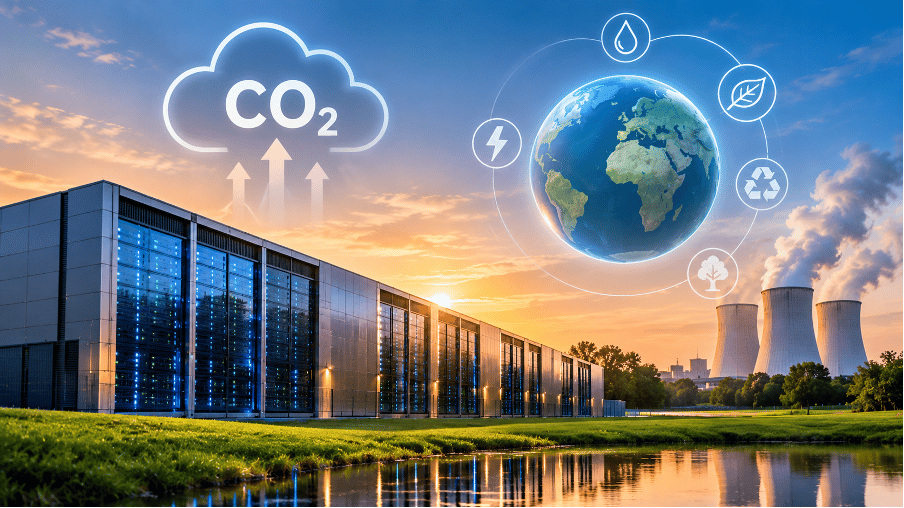
Electricity consumption is one of the most visible environmental concerns associated with data centres, but it is not the only one. Cooling is another important consideration. Servers generate heat during operation, and maintaining suitable temperatures is essential for reliability and performance. Depending on the design of a facility, cooling may involve air conditioning, water-based systems or alternative technologies.
The resources required can vary considerably between sites. Factors such as climate, building design, equipment density and cooling technology all influence how much energy and water a facility uses. Water consumption has attracted particular attention because some cooling methods place additional demand on local supplies. This can become a concern in areas where water resources are already under pressure, making location and infrastructure planning important considerations when developing new facilities.
The environmental footprint also extends to the materials used to manufacture the technology itself. Servers, storage devices and networking equipment contain metals, plastics and other materials that require energy and resources to extract, process and manufacture. This means that the environmental impact of digital infrastructure cannot be measured solely by looking at the electricity consumed while equipment is switched on. The production, transportation, maintenance, replacement and eventual disposal of that equipment also need to be considered. A more complete approach to sustainability looks at the entire lifecycle of the technology, rather than focusing on individual stages in isolation.
What the UK's data centre expansion tells us about carbon emissions
The scale of the potential environmental impact is illustrated by recent proposals for large data centre developments in England.
The Guardian reported that two planned facilities in Buckinghamshire and Bedfordshire could produce a combined 4.577 million tonnes of carbon emissions annually when fully operational. The analysis, carried out by campaign group Foxglove, suggested that this would exceed the reported emissions of ExxonMobil's UK operations in 2023. The proposed developments would require a combined 1.3GW of power and include plans for their own gas-fired power stations because of delays in securing connections to the electricity grid.
However, these figures need some context. The emissions estimates assume the facilities operate at full capacity; an assumption disputed by the government. They relate to specific proposed developments and should not be treated as representative of every UK data centre. Nevertheless, they demonstrate the scale of the questions surrounding how future facilities will be powered.
The wider electricity figures are also worth considering. Research published by the Department for Energy Security and Net Zero estimated that data centres accounted for 4.5 terawatt-hours of electricity consumed from the grid in Great Britain during 2024. This represented approximately 2% of total grid electricity consumption. The same research found that electricity consumption by the data centres included in the study increased by 41% between 2020 and 2024. London and the Southeast accounted for 77% of the recorded consumption in 2024. These figures highlight the importance of considering energy requirements when planning new facilities. They also demonstrate why improvements in operational efficiency, equipment performance and resource management deserve attention alongside investment in additional capacity.
Why responsible equipment disposal matters
The environmental benefits of recovering and recycling IT equipment need to be balanced with another important requirement: protecting the information stored on it. Data centre hardware can contain sensitive business information, customer records, operational data and commercially valuable material. Servers and storage devices may hold significant quantities of information, even after they have been disconnected or removed from service. Before equipment is reused, resold or recycled, organisations need to ensure that any data stored on it has been dealt with appropriately.
Depending on the equipment and its intended destination, this may involve certified data erasure or physical destruction of storage media. The appropriate method should be determined by the organisation's security requirements, the condition of the device and whether the hardware is suitable for further use. Having clear records of this process is equally important. Businesses should be able to establish which assets have been collected, how they have been processed and what has happened to them afterwards. Detailed asset tracking and reporting help provide this visibility. They also support internal governance by giving organisations evidence of how retired equipment has been handled.
For data centre operators, this is particularly relevant when managing large volumes of hardware across multiple sites. Without a consistent process, equipment can be difficult to trace once it leaves the facility. Secure disposal and responsible recovery therefore need to work together. An environmentally conscious approach should never come at the expense of information security.
How NLTS supports responsible IT asset management
As conversations around the environmental impact of digital infrastructure continue, organisations have an opportunity to look more closely at their own IT equipment processes.
At NLTS, we support businesses with the secure and responsible management of redundant IT equipment. Our services are designed to help organisations maintain control over retired assets while ensuring that data security and appropriate end-of-life processing remain priorities. Our secure IT collections provide a managed route for removing redundant equipment from business premises and operational facilities. This helps organisations arrange the collection of hardware that is no longer required, rather than leaving it unused or allowing it to enter unsuitable disposal channels.
Through our certified data destruction services, we help businesses ensure that sensitive information stored on retired devices is securely destroyed. This is particularly important for servers, storage systems and other equipment that may have held confidential or commercially sensitive information. We also provide detailed asset tracking and reporting, giving organisations a clearer record of the equipment collected and its journey through the process. This supports accountability and helps businesses maintain better oversight of their retired IT assets.
Where equipment retains value, our asset recovery services can help identify opportunities for reuse and resale. Recovering suitable hardware can extend its useful life and provide an alternative to immediate recycling. For equipment that cannot be reused, responsible recycling ensures it is directed towards appropriate end-of-life processing.
NLTS holds ISO 27001 certification for Information Security Management and ISO 9001 certification for Quality Management. These standards support our commitment to maintaining structured approaches to information security and the quality of our services. Our role is to help organisations manage the equipment they no longer need securely and responsibly, while recognising that every asset has different requirements depending on its condition, data security considerations and potential for recovery.
Balancing digital progress with environmental responsibility
The UK's digital ambitions are unlikely to slow down. Artificial intelligence, cloud computing and the continued digitisation of business and public services will all contribute to demand for additional computing capacity. There are clear economic and technological opportunities associated with this growth. However, the environmental implications deserve equal consideration, particularly as energy demand and carbon emissions become more prominent in discussions about future infrastructure.
The challenge is not simply about reducing the number of data centres being built. It is about making sure that the industry develops with a better understanding of the resources it consumes and the consequences of its operational decisions. Energy efficiency, responsible power generation, effective cooling and careful planning all have an important role to play. So does the way technology is purchased, maintained, upgraded and eventually retired.
Businesses cannot control every aspect of the environmental impact associated with digital infrastructure, but they can take greater responsibility for the equipment within their own operations. Reviewing replacement decisions, identifying opportunities for asset recovery and ensuring retired hardware is securely and responsibly processed are practical steps towards better IT management. Ultimately, Britain's digital future should be measured by more than its ability to build additional computing capacity. How efficiently that capacity operates, how resources are used and how technology is managed throughout its working life will also help determine its environmental impact.
Call 0203 380 7075
Email: info@nlts.co.uk
Site: www.nlts.co.uk
North London Telecoms Systems
WEEE Registration Number and carrier licence:
CBDL156450
footer 2CBDU485395footer 2
We are looking to purchase Cisco, Avaya, Nortel, Mitel, Ericsson, siemens, shoretel, Alcatel, Snom.