
AI Data Centres Are Growing Fast, But Are They Being Built to Last?
Thursday, October 01, 2026
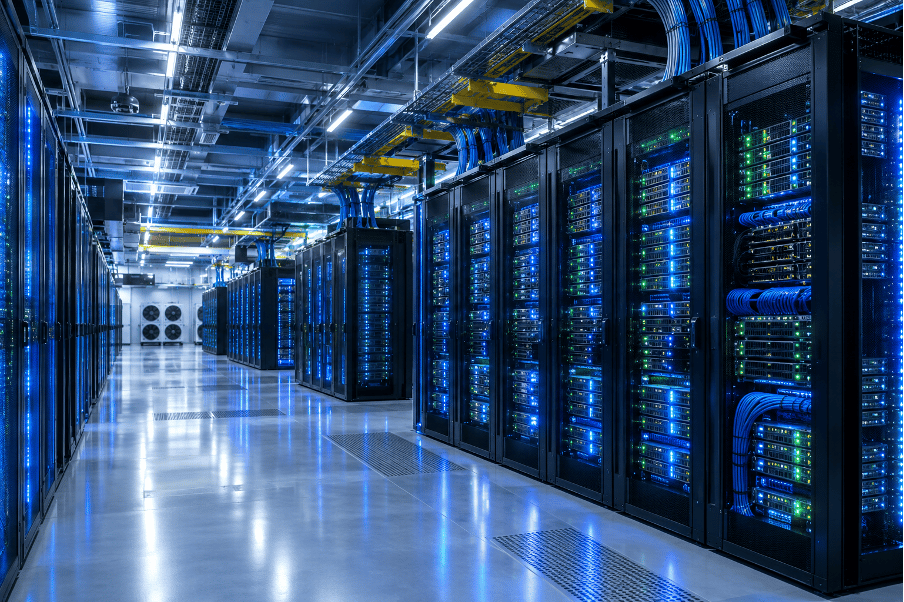
Artificial intelligence is changing the way businesses think about technology infrastructure. Behind every AI model, automated service and high-performance application sits a physical layer of servers, networking equipment, power systems, cooling infrastructure and storage. As demand for AI continues to grow, investment in the data centres supporting it is accelerating rapidly.
The UK is already positioning itself for a significant expansion. The Government’s 2026 UK Compute Roadmap estimates that the country will need at least 6GW of AI-capable data centre capacity by 2030, around three times the capacity available today. But building more capacity is only part of the challenge. The bigger question is whether today's infrastructure will still be suitable as AI technology, workloads and hardware continue to evolve.
The pace of AI is putting pressure on infrastructure
Data centres have always had to accommodate changing technology, but AI is increasing the pace of change. Traditional enterprise workloads tend to be relatively predictable. AI workloads can require much higher computing density, significant networking capacity and considerably more power. The physical environment must be capable of supporting equipment that may be substantially different from the infrastructure used in a conventional server environment.
Recent research highlighted by Planning, Building & Construction Today found that 65% of 300 senior data-centre decision-makers surveyed across the UK, Ireland and the Nordics had seen demand for AI capacity increase over the previous 12 months. The same research found that 77% considered cabling an increasingly important bottleneck for supporting AI workloads. This illustrates an important point: a data centre can be physically complete without necessarily being ready for everything that comes next.
If infrastructure is designed around the immediate requirements of a particular generation of hardware, there is a risk that those decisions become restrictive when the next generation arrives. That could mean expensive modifications, additional cabling, changes to power distribution or cooling systems, or even significant periods of disruption.
Building for AI means building for change
There is no realistic way to predict exactly what AI infrastructure will look like several years from now. Hardware manufacturers will continue to develop faster and more powerful processors. Rack densities may change. Networking requirements will evolve. Cooling technologies will develop alongside higher-performance equipment. Organisations will also change the way they use AI as the technology becomes embedded into everyday business processes.
That makes flexibility increasingly important. The UK Government's own roadmap recognises this, stating that AI infrastructure needs to be dynamic and adaptable, while planned AI Growth Zones are intended to expand capacity as demand develops. The Government estimates that at least 6GW of AI-capable capacity will be required by 2030, with some individual sites expected to reach 500MW or more.
This is not simply about making buildings larger. It is about making the infrastructure inside them capable of changing. A data centre that can accommodate future hardware, additional networking requirements and changing workloads without requiring extensive reconstruction will have a very different lifecycle from one designed solely around today's specification.
The hidden resource cost of rapid expansion
There is another reason the long-term view matters: building and operating data centres consumes significant resources. According to the Office for National Statistics, data centres consumed an estimated 4.5TWh of electricity in Great Britain in 2024, equivalent to around 2% of total grid electricity consumption. Consumption increased by approximately 41% between 2020 and 2024. The Parliamentary Office of Science and Technology also notes that servers, networking equipment and batteries can have relatively short lifespans, generally around three to eight years, and contribute significantly to data-centre e-waste.
This creates an interesting contradiction. The infrastructure is being built to support a digital future, yet some of the technology inside it will inevitably become outdated well before the buildings themselves reach the end of their useful lives. That means sustainability cannot stop at the construction stage. It needs to continue throughout the operational lifecycle of the technology.
What happens when the hardware changes?
Imagine a new AI data centre becoming operational with thousands of servers, network devices, storage systems and supporting components. Several years later, a new generation of hardware becomes available. The newer equipment offers better performance and greater efficiency, making the original hardware less attractive for the workloads the facility was designed to support. The building remains useful, the power infrastructure may remain useful, the cooling systems may remain useful. But a proportion of the IT equipment may no longer be required.
This is where the concept of technology lifecycle management becomes particularly important. Replacing equipment is not necessarily a sign that the original investment has failed. Technology naturally develops. The challenge is making sure that equipment leaving one stage of the lifecycle is managed responsibly rather than simply becoming another disposal problem. Where equipment retains value, there may be opportunities for reuse, remarketing or recovery. Where it does not, secure data destruction and responsible recycling become important parts of the process. For data-centre operators, this needs to be considered before equipment starts accumulating in storage rooms or decommissioning areas.
The data security challenge doesn't disappear when hardware is switched off

One of the biggest misconceptions about retired IT equipment is that it becomes harmless once it is disconnected. A server that is no longer running can still contain information. Storage devices may contain customer data, business information, system configurations, credentials or other sensitive material. Simply removing equipment from a rack does not remove the information stored on it. As data centres become larger and technology refresh cycles continue, secure decommissioning therefore becomes an increasingly important part of the wider infrastructure lifecycle.
For organisations managing end-of-life technology, data destruction can provide a documented way of ensuring information is securely removed before equipment moves on to reuse, recovery or recycling. This is an area where the physical and digital sides of infrastructure management increasingly overlap.
A more circular approach to data-centre technology
A circular approach does not mean keeping old technology in service indefinitely, it means making better decisions about what happens at each stage of its life. Some equipment may be suitable for redeployment elsewhere. Some may have residual market value. Other equipment may need to be dismantled and recycled so that materials can be recovered.
The important thing is to avoid treating every retired asset as waste. At NLTS, we support organisations through this part of the technology lifecycle, providing secure IT collections, certified data destruction, asset tracking and reporting, responsible recycling and asset recovery.
For a large technology estate, visibility is particularly important. Knowing what equipment has been collected, what has happened to it and where it ultimately went provides a much clearer picture than simply removing equipment from a server room and considering the job finished. It also creates a stronger connection between IT asset management, information security and sustainability.
Traceability matters as infrastructure becomes more complex
The larger the technology estate becomes, the harder it can be to maintain visibility without a structured process. AI data centres are likely to contain substantial volumes of high-value equipment, often with different hardware types, ownership arrangements and refresh cycles. When equipment is removed, organisations need confidence that the correct assets have been identified, collected and processed.
This is why documentation and asset reporting are not just administrative exercises. They can form an important part of the governance surrounding technology decommissioning. At NLTS, our approach is supported by ISO 27001 for Information Security Management and ISO 9001 for Quality Management. These standards help reinforce the importance of controlled processes, information security and consistent quality across the services we provide.
Building quickly should not mean thinking short term
The demand for AI infrastructure is unlikely to disappear. The UK Government is actively planning for significant growth, while the wider industry continues to invest heavily in new capacity. At the same time, the pressure on power, land, water and other resources means that new infrastructure will increasingly be expected to demonstrate long-term value. The answer is to think more carefully about what is being built and what will happen throughout its lifetime.
A data centre is not finished when the building is complete. Its technology will evolve, equipment will be replaced, workloads will change, and infrastructure will eventually be upgraded or decommissioned. The organisations that recognise this from the beginning can take a more complete view of their investment. The AI data-centre boom is ultimately about much more than building capacity. It is about creating infrastructure that can adapt, operate efficiently and manage its technology responsibly throughout its entire lifecycle. And as AI data centres become an increasingly important part of the UK's digital infrastructure, that lifecycle thinking may prove just as important as the speed at which the next facility is built.
Call 0203 380 7075
Email: info@nlts.co.uk
Site: www.nlts.co.uk
North London Telecoms Systems
WEEE Registration Number and carrier licence:
CBDL156450
footer 2CBDU485395footer 2
We are looking to purchase Cisco, Avaya, Nortel, Mitel, Ericsson, siemens, shoretel, Alcatel, Snom.